Ruthven Plantation
Young Captain Jack · The Son of a SoldierRuthven Plantation is the large South Carolina estate around which the domestic, military, and identity conflicts of the story converge. Set back from the river on land regarded as one of the richest plantations in South Carolina, it is both a protected household and a vulnerable frontier position during the American Civil War. The plantation shelters Alice Ruthven, Marion Ruthven, and Jack Ruthven; receives wounded soldiers; faces Confederate retreat and Federal pressure; and ultimately becomes the place where Jack’s disputed parentage is clarified and Dr. Mackey is held prisoner.
Setting and Household
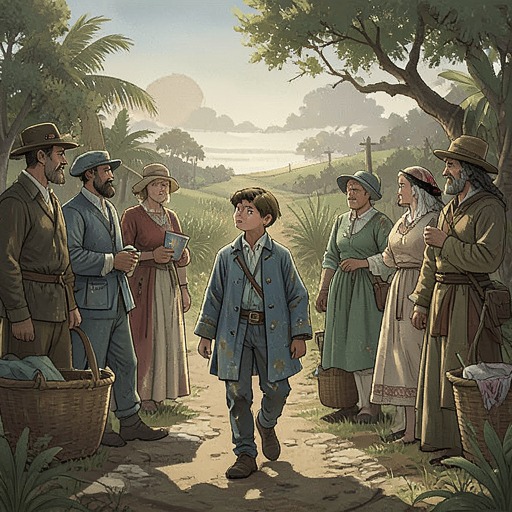
Ruthven Plantation is dominated by a large mansion standing some distance from the river. Its scale and prosperity establish the household’s social position, but the estate is not presented merely as a symbol of wealth. It is a lived family space in which Alice Ruthven raises Marion Ruthven and Jack Ruthven, whose attachment to one another is described as exceptionally close. Alice is a widow because Colonel Martin Ruthven died at the Battle of Gettysburg, leaving her responsible for the home and its children. Within this household, Jack is treated as Marion’s brother even before the full truth of his origins is known.
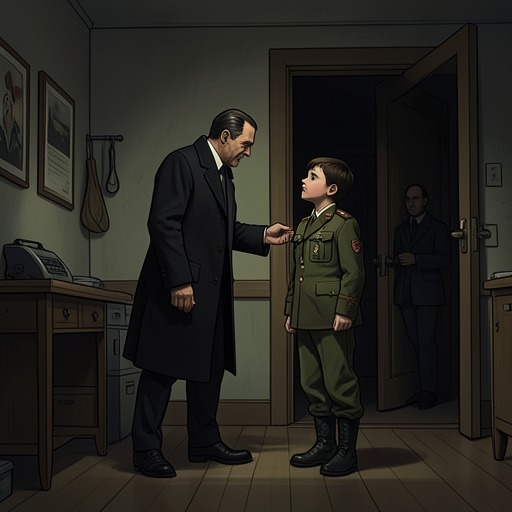
The plantation’s apparent security is repeatedly tested by the uncertainty surrounding Jack’s place in the family. St. John Ruthven’s assertion that Jack is a nobody who does not belong to the Ruthven family turns the estate from a settled home into the scene of a personal threat. Marion counters that Alice and her husband adopted Jack when he was three or four years old and that he is John Ruthven, her own brother. The plantation therefore preserves two competing versions of Jack’s identity: the household’s lived recognition of him as family and the hostile claim that he is an outsider who will eventually have to leave.
A Refuge in Wartime
As military danger spreads through the region, Ruthven Plantation becomes a place of practical responsibility rather than passive shelter. Jack organizes a company of boys numbering twenty-three members and serves as its captain. The purpose of this local force is defined as protecting homes, mothers, and sisters, and a visiting officer recognizes that objective as honorable. The estate thus becomes associated with youthful courage and communal defense, while Jack’s authority develops through service to the people and property around him.
The mansion also functions as a wartime medical refuge. Wounded men are brought to the plantation when their bearers can carry them no farther, and the household accepts them. Marion works around the sick rooms while Jack attends to the stable and barns, dividing the labor of care and defense between domestic interiors and the working spaces of the estate. George Walden develops a raging fever and requires attention from Alice, while an injured colonel arrives by ambulance and the family prepares a bedroom for him. The plantation’s rooms are consequently transformed by war: bedrooms become accommodation for the wounded, and the household’s ordinary routines are reorganized around medical need.
Threat, Retreat, and Destruction
The estate’s position exposes it to the changing fortunes of war. News reaches the plantation that a large Federal force has appeared nearby and that the Confederate army has been compelled to fall back toward the mountains and the valley beyond. The plantation is no longer protected by a stable military line; its inhabitants must respond to a retreating army and the possibility that hostile soldiers may reach the property.
That danger becomes immediate when smoke rises and flames break out in several directions as soldiers leave the place. Jack and his followers reach the roadway in front of the plantation while the mansion and grounds are threatened by fire. The episode makes the estate a literal battleground between home and destruction. Its significance lies not only in the physical danger but also in the contrast between the plantation’s earlier reputation for richness and the sudden vulnerability produced by war.
Even amid these emergencies, the plantation remains a node in a wider network of movement. The boathouse belonging to Old Ben, a formerly enslaved man of the Ruthven plantation, stands on the shore of a broad bay overlooking the Atlantic. The estate is therefore connected to the river, bay, roads, barns, stable, and distant mountain routes through which people, soldiers, prisoners, and information move. Its apparent isolation never makes it self-contained; wartime events continually bring the outside conflict into its domestic center.
Return, Captivity, and Revelation
After Jack is released from a lonely mountain cabin, he and his companions cross the country toward Ruthven Plantation. His return is announced through the mansion itself: a knocker sounds at the door, a voice calls from an upper window, and Alice recognizes him with a cry of joy. The scene restores the estate as a homecoming place, but the arrival is complicated because Dr. Mackey, now a prisoner, accompanies him. Alice is startled to see the doctor under restraint, and the plantation becomes the setting where the former pursuer is brought under the authority of the household he threatened.
Alice orders Old Ben to ensure that Dr. Mackey cannot escape while she speaks privately with Jack. She then tells Jack that he is not Dr. Mackey’s son but the colonel’s son. The mansion thus serves as the final domestic court for the identity dispute that has unsettled Jack’s place in the family. The revelation reverses Dr. Mackey’s claim and joins Jack’s adopted belonging within the Ruthven household to a biological connection with Colonel Stanton.
The consequences are materially enforced within the plantation. Dr. Mackey is taken to a garret room, tied to an old four-poster bed weighing considerably more than a hundred pounds, and placed under Old Ben’s watch. A space associated with the household’s upper interior becomes a prison, while the former slave of the plantation becomes its guard. The arrangement reverses the power relations that had previously enabled Dr. Mackey to threaten Jack and the family: the doctor is confined inside the home, and the household’s trusted protector controls his movements.
Restoration and Narrative Significance
Colonel Stanton’s recovery is slow, but by the time he is able to move about again, the great Civil War has ended. The end of the conflict brings relief to the colonel, Jack, Alice, and Marion, and Ruthven Plantation emerges as the place where wartime suffering gives way to restored family continuity. It has endured military retreat, fire, illness, injury, captivity, and disputed identity without ceasing to function as the household’s center.
The plantation’s long-term significance is also tied to Jack’s future. The boy who was once accused of belonging nowhere becomes, through education and service, an officer who graduates from West Point Military Academy with high honors, goes West to serve at a fort, and rises to the rank of colonel. His later career confirms the qualities first displayed at the plantation: bravery, loyalty, self-reliance, and a willingness to protect others. Ruthven Plantation is therefore more than a backdrop. It is the home that gives Jack his first social identity, the refuge that tests his responsibilities, and the domestic stronghold from which his movement toward a public military life begins.